
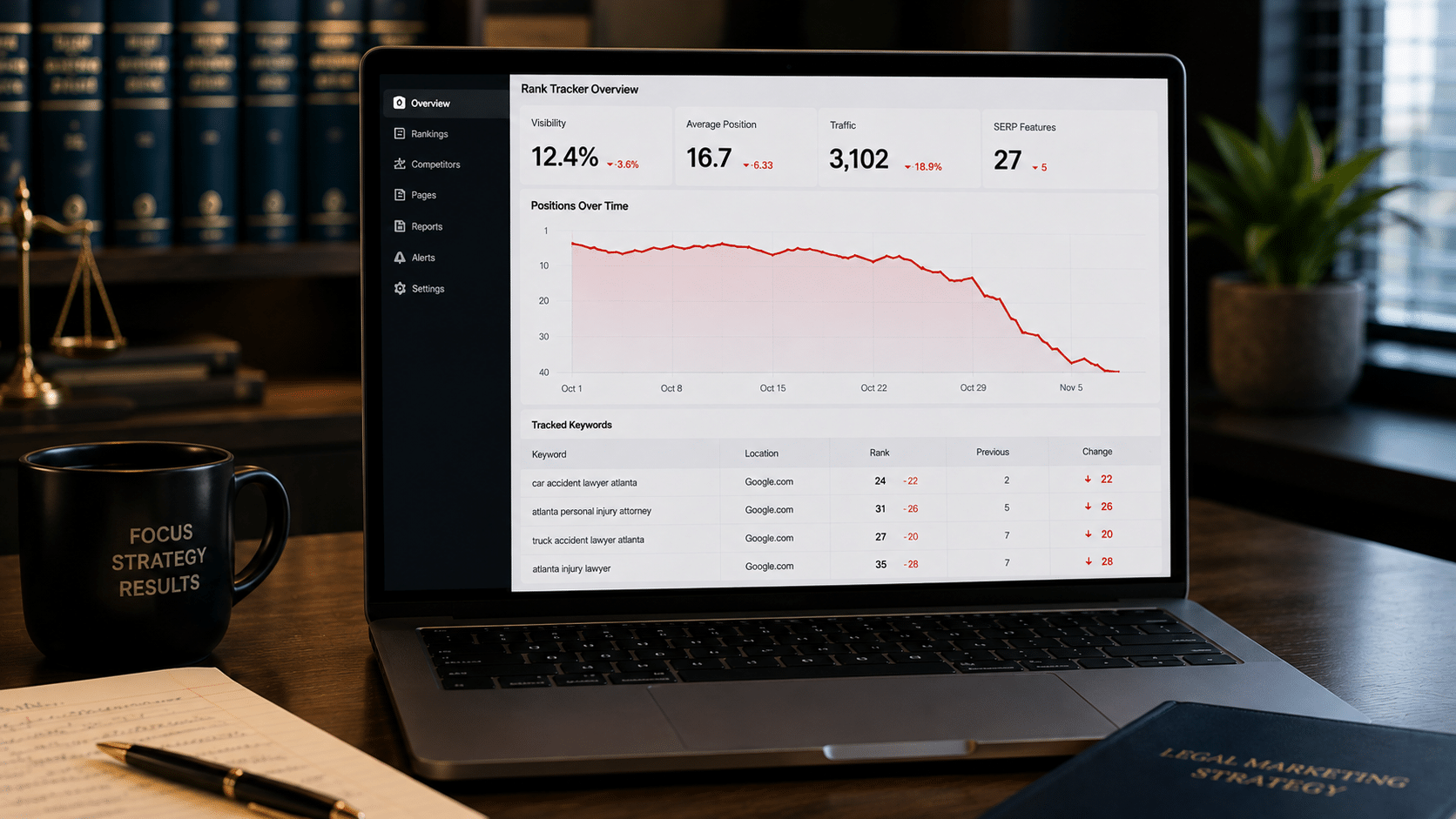
You log into your rank tracker dashboard expecting the usual small movements, up a spot here, down a spot there. Instead you see a cliff. A keyword that sat comfortably at position 2 is suddenly showing position 24. Your gut says something broke, and your ad budget conversations with your partners are already getting tense.
Take a breath. Before you assume your SEO stopped working overnight, there is something bigger going on, and it has nothing to do with your firm’s actual visibility in Google.
What actually changed at Google
Google recently started wrapping search result links behind a new type of tracking URL, using a google.com/goto path instead of showing the destination site directly. Search Engine Roundtable confirmed the rollout, noting Google had been testing this approach since July 2026 before pushing it more broadly.
The likely reason isn’t a mystery. AI companies and third party tools have been scraping Google’s search results at scale to build ranking data, train models, and power tracking software. Wrapping the links in an encoded, harder to parse format makes that scraping more difficult. A Google spokesperson confirmed to Search Engine Roundtable, “We have a long history of deploying technical measures against evolving forms of abuse, and we regularly take steps to protect our services and users.”
Why this breaks rank trackers
Tools like Ahrefs, Semrush, and other third party rank trackers work by running automated searches and reading the results, essentially the same scraping behavior Google is now trying to block. When a result used to show a clean URL like yourfirm.com, the tracker could confirm exactly which site held which position. Now that same result might show a string of encoded characters, and the tracker has to guess or fails to match it at all.
The result is what our SEO team caught early: keywords that firms were legitimately ranking well for started showing dramatic, sudden drops in rank tracking dashboards, sometimes falling 20 or more positions overnight. When we manually searched those same keywords, the actual search results told a completely different story. One firm’s page was sitting at position 2, verified with a live manual search, while the automated tracker reported it at position 24.
This is not an isolated glitch. It is happening industry wide, across every firm using automated rank tracking software, in every market and every practice area.
Your rankings almost certainly haven’t moved
Here is the distinction that matters: there is a difference between what your dashboard reports and what is actually happening in live search results. Right now, for many firms, those two things have split apart.
If you search your own keywords manually, in an incognito browser window so your personal search history and location don’t skew results, you will very likely find your site sitting right where it was. The tracking software is the thing that broke, not your visibility.
That distinction matters because the instinct in a moment like this is to react. Panic emails to your marketing team. Pressure to fix something that shifted in a piece of third party software neither you nor your SEO team controls. The better move is to verify before you react.
| Data source | What it shows right now | How reliable is it |
|---|---|---|
| Rank tracker data | Sharp, sudden drops for many keywords | Currently unreliable due to Google’s link changes |
| Manual incognito search | Actual live position in search results | Accurate, reflects real rankings |
| Google Search Console | Direct performance data pulled from Google itself | Accurate, unaffected by the tracking link change |
How we verify what’s really happening
This is exactly the kind of moment where relying on a single automated tool becomes a liability. Our approach has never been to hand you a dashboard and walk away. When something in the industry shifts like this, we pull data from multiple sources and confirm it before drawing conclusions.
For every client we work with, that means pulling performance data directly from Google Search Console, which reports what Google itself is seeing rather than relying on a third party’s ability to scrape and interpret search results. It also means manually spot checking the keywords that matter most, searching them the way a real client would, in incognito mode, to see exactly what shows up.
Automated rank tracking is a useful daily convenience when it works. It is not the only signal we trust, and it should not be the only signal you trust either.
Want to know where your firm actually ranks?
We’ll pull your Google Search Console data and manually check the keywords that matter, so you know your real positions instead of trusting a dashboard that might be misreading Google right now.
Book A Free ConsultationWhat this means going forward
The SEO industry will adjust to this. Tool providers are already working on ways to unwrap or reinterpret these new tracking links, and it is reasonable to expect rank tracking accuracy to improve over the coming weeks as they do. In the meantime, treat any dramatic single day swing in your rank tracker with healthy skepticism, especially if it does not match what you see when you manually check your own results.
This is also a good reminder of a broader point. Dashboards are tools, not truth. The actual measure of whether your SEO is working is whether real clients are finding your firm and calling your office, not whether one piece of software agrees with another on a given afternoon.
State bar advertising rules continue to apply to any public communication about your firm’s marketing performance or results, so keep that in mind if you’re discussing rankings publicly with prospective clients.
Questions we’re hearing about this
Why did my law firm’s Google ranking suddenly drop?
It likely did not. Google changed how it links to sites within search results, wrapping URLs in a new tracking format designed to slow down scraping. Many third party rank tracking tools cannot yet read these new links correctly, which is causing false, dramatic drops in tracked positions across the industry. A manual, incognito search of your own keywords is the fastest way to confirm your real position.
Is Ahrefs rank tracking broken?
For now, in many cases, yes, at least in terms of accuracy. Ahrefs and similar tools rely on being able to read the destination URL behind each search result. Google’s new tracking link format makes that harder, so tracked positions may not reflect where sites actually rank. Tool providers are expected to adjust their systems over time.
How do I know if my SEO rankings actually changed?
Don’t rely on a single dashboard. Cross check with Google Search Console, which reports data directly from Google, and manually search your top keywords in an incognito browser window. If those two sources agree with each other but disagree with your rank tracker, the tracker is the one with the problem.
Should I put in a support ticket every time I see a drop in my rank tracker?
Not right now. Given how widespread this issue is, spot checking manually first will save time and avoid chasing a problem that does not actually exist on your site. If a manual, incognito search confirms a real drop, that is the moment to flag it to your SEO team.