
The YouTube view count change means your law firm’s videos could show higher numbers without more people actually watching. Here’s what changed and which metrics to use when evaluating your video strategy.
Starting August 24, 2026, YouTube counts a view from the first frame of playback, across every format: long-form videos, Shorts, podcasts, and live streams. The stricter definition that used to be “a view” still exists. YouTube just renamed it an engaged view.
If you’re a law firm owner who checks YouTube numbers before a partner meeting, or you’ve got a marketing coordinator reporting “views” as a sign the video strategy is working, you need to understand what changed before you draw any conclusions from next month’s dashboard.
YouTube view count change: What changed and when
Before August 24, 2026, YouTube required someone to watch past the first few seconds, or actively click to watch, before it counted as a view. That threshold is what most firm owners have always understood a “view” to mean.
Now, a view registers the instant a video starts playing, whether someone deliberately clicked play or simply hovered over a thumbnail long enough for it to autoplay. No minimum watch time required.
This isn’t a surprise policy shift out of nowhere. YouTube applied this same first-frame counting method to Shorts back in March 2025, aligning with how TikTok and Instagram Reels already counted views. August 24 extends that same logic to long-form video, podcasts, and live content, standardizing the definition of “view” across the entire platform.
The old, stricter definition didn’t disappear. YouTube kept it and gave it a new name: engaged view.
YouTube’s official explanation covers the difference between views and engaged views across its video formats.
Views vs. Engaged Views: What’s the Actual Difference
Here’s where a lot of confusion is going to show up in your analytics dashboard over the next few months. YouTube now tracks three separate things, and they mean very different levels of attention.
| Metric | What it means |
|---|---|
| Thumbnail impression | Someone saw your video’s thumbnail somewhere on YouTube and did not interact with it in any way |
| View | Someone started playback, even briefly, whether by clicking or by a thumbnail autoplaying as they scrolled past |
| Engaged view | Someone watched past that first frame, or deliberately clicked or tapped to start the video |
A thumbnail impression means nothing happened. A view now means playback started, full stop. An engaged view means someone actually stuck around or made a deliberate choice to watch.
That third category, engaged views, is the closest thing to what “a view” used to mean before August 24.
Why the YouTube view count change could raise your numbers
This part matters for how you talk about your firm’s video performance internally. Your public view count is going to climb, sometimes significantly, on videos posted after August 24. That increase reflects a change in measurement, not a change in how many people are genuinely paying attention to your content.
The change is not retroactive. Videos you posted before August 24 keep the view totals they already earned. Any new plays those older videos pick up after the change takes effect will count under the new, looser system. That means a video from six months ago could start accumulating views faster than it did before, purely because the counting method changed underneath it.
If you or your team are tracking video performance month over month, treat August 24, 2026 as a hard line in your reporting. Comparing July’s view count to September’s view count on the same channel is no longer an apples-to-apples comparison. The numbers are measuring different things.
The Number That Actually Matters for Your Firm
If you’re investing time or budget into video content to build your firm’s reputation or bring in cases, the raw view count was never the number that told you whether it was working. It’s even less useful now.
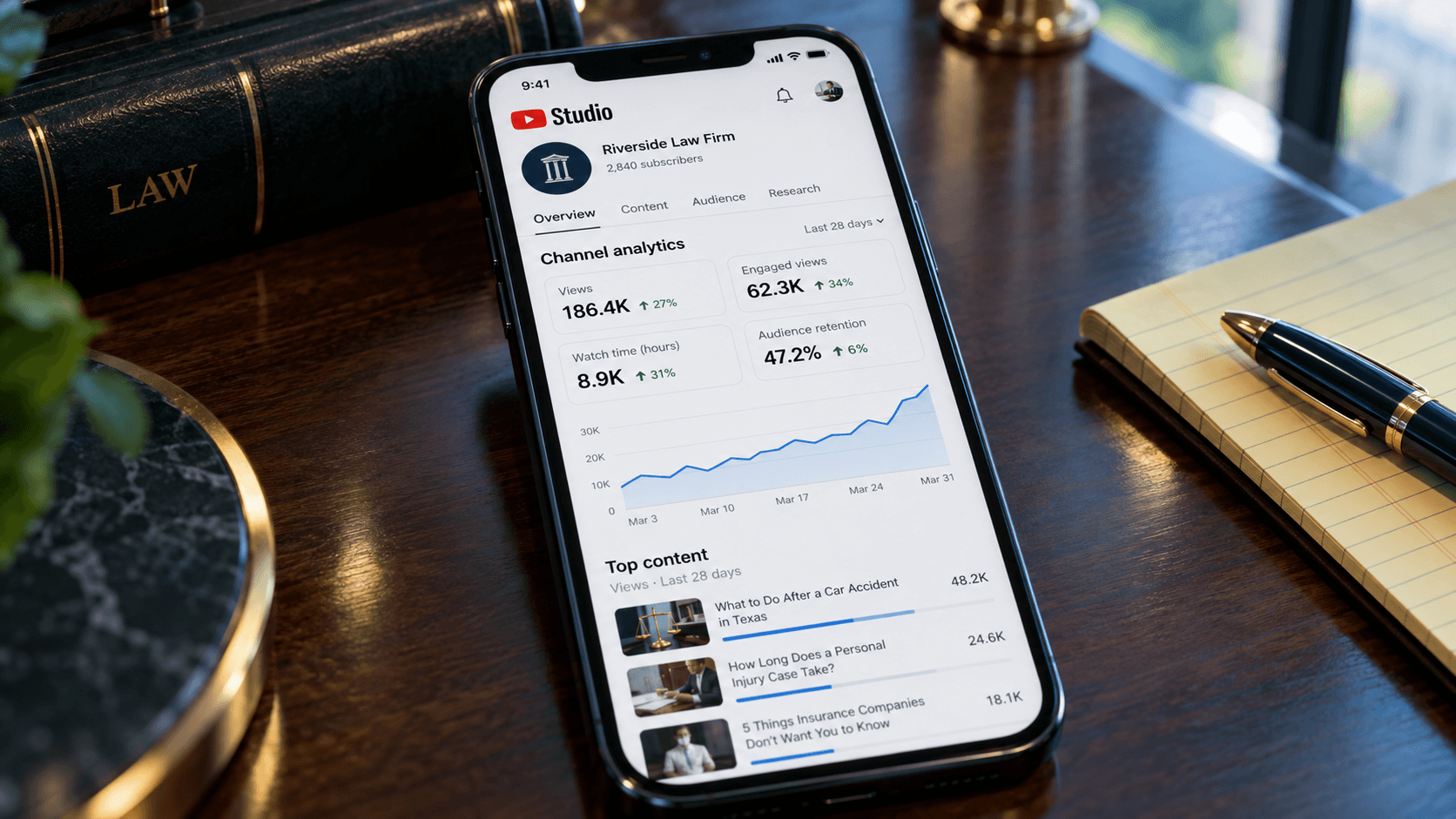
Engaged views, watch time, and retention are what tell you whether someone actually absorbed your message, whether that’s an explainer on what to do after a car accident, an FAQ about a divorce filing, or a piece introducing you and your firm to a potential client. YouTube has confirmed that its own recommendation algorithm and creator monetization eligibility both remain anchored to the engaged, watch-time-based metrics, not the new first-frame view count. Nothing about how YouTube decides to promote or reward content has changed.
For a firm owner, the practical takeaway is the same one that should have applied all along: don’t run your video strategy off the view counter. Look at watch time, retention (are people watching the whole thing or dropping off in the first ten seconds), and most importantly, whether that content is turning into calls, form fills, or booked consultations. Those are the numbers connected to cases signed. View count never was.
What This Means If You’re Using YouTube to Bring In Cases
The YouTube view count change doesn’t require a new video strategy. It does call for a few adjustments to how you measure and report results:
- Update how you report internally. If you or your team present video performance to partners, flag the August 24 change explicitly so nobody mistakes a bigger number for better performance.
- Stop comparing pre- and post-August 24 view counts directly. Use engaged views for any trend line that crosses that date.
- Keep your eye on the metrics tied to actual business outcomes. Watch time, retention, and conversion from video to lead are what tell you if your content strategy is working. That was true before this change and it’s still true now.
- Don’t let this scare you off video. Video remains one of the strongest ways for a law firm to build trust with a potential client before they ever pick up the phone. A bigger, less precise view count doesn’t change that. If anything, it’s a reminder to build your content strategy around the metrics that actually connect to case volume, not the ones that just look good on a screenshot.
This is also a good moment to think about how your firm’s video content fits into the bigger picture of your digital marketing, including where video content sits alongside your other lead generation channels. A view count change on one platform shouldn’t be the thing driving your content decisions either way.
State bar advertising rules still apply to any video content your firm publishes, regardless of how YouTube counts the views. If you’re using client stories, testimonials, or case outcomes in your videos, make sure they’re reviewed against your bar’s advertising requirements before they go live.
Find out which of your videos actually bring in cases
We’ll look past the view counter at your engaged views, watch time, and retention, and show you which videos are turning into calls and booked consultations.
Book A Free ConsultationQuestions About YouTube’s New View Count
What is an engaged view on YouTube?
An engaged view is a playback where the viewer watches past the initial first frame, or deliberately clicks or taps to start the video. It’s the metric that replaced the old definition of “view” and continues to govern monetization and the YouTube Partner Program.
Did YouTube change how views are counted?
Yes. Starting August 24, 2026, YouTube counts a view from the first frame of playback across all formats, including long-form video, Shorts, podcasts, and live streams. The previous, stricter definition is now called an engaged view.
Will this affect YouTube monetization or the algorithm?
No. YouTube has stated that creator earnings, Partner Program eligibility, and how the recommendation algorithm works all remain based on engaged views and watch time, not the new first-frame view count.
How does this affect law firm marketing on YouTube?
Your public view counts will likely increase without any real change in audience engagement. Firms should shift their focus to engaged views, watch time, and retention, along with conversion metrics like calls and consultation bookings, rather than treating the public view count as a performance indicator.