Two attorneys ran the exact same ad campaign with us. They had the same copy, the same targeting, and the same number of leads. Bernard signed 75 cases. Alyssa signed zero.
When we called Alyssa, she sighed. “I couldn’t get anybody on the phone. Nobody answers when I call.”
When we called Bernard, he laughed. “Yeah, nobody answers. That’s why I call, text, and email. I’m relentless about it.”
That story is in our book, Law Firm Growth Accelerator, and it’s still the clearest picture of what separates firms that grow from firms that stall. What’s changed is that the gap between Bernard and Alyssa isn’t measured in days anymore. It’s measured in minutes.
We call it the Zero-Delay Intake Race. The firm that responds first, with a real conversation, usually signs the case. AI now makes it possible to answer every lead instantly, around the clock, while your people step in for the moments that need a human.
If Your Intake Feels a Step Behind, You’re Not Alone
Most firms built intake the way everyone did: a receptionist during business hours, voicemail after five, and a callback list worked the next morning. That made sense. Nobody taught you intake in law school.
Your leads changed, though. Someone who just got rear-ended or served with divorce papers doesn’t leave a message and wait. They’re scared, they’re on their phone, and they’re calling down the list until somebody picks up. It’s the same thing you’d do with an overflowing toilet and a list of plumbers.
Clio’s research found that responsiveness matters as much as location when clients choose a lawyer, yet in a 2024 test of 500 firms, only 40% answered the phone. When a potential client is calling around, being the firm that answers can decide who gets the case.
Follow-up is just as lopsided. We see it all the time: most sales take five or more follow-ups, yet most firms quit after one or two attempts. That’s Alyssa. It isn’t a work ethic problem. It’s a system problem.
There’s a new money angle too. Starting October 1, Google charges for missed Local Services Ads calls placed during business hours when the caller stays on the line 20 seconds or more. A call you don’t answer isn’t free anymore. You pay for it, and your competitor signs it.
The Old Way vs. the New Way
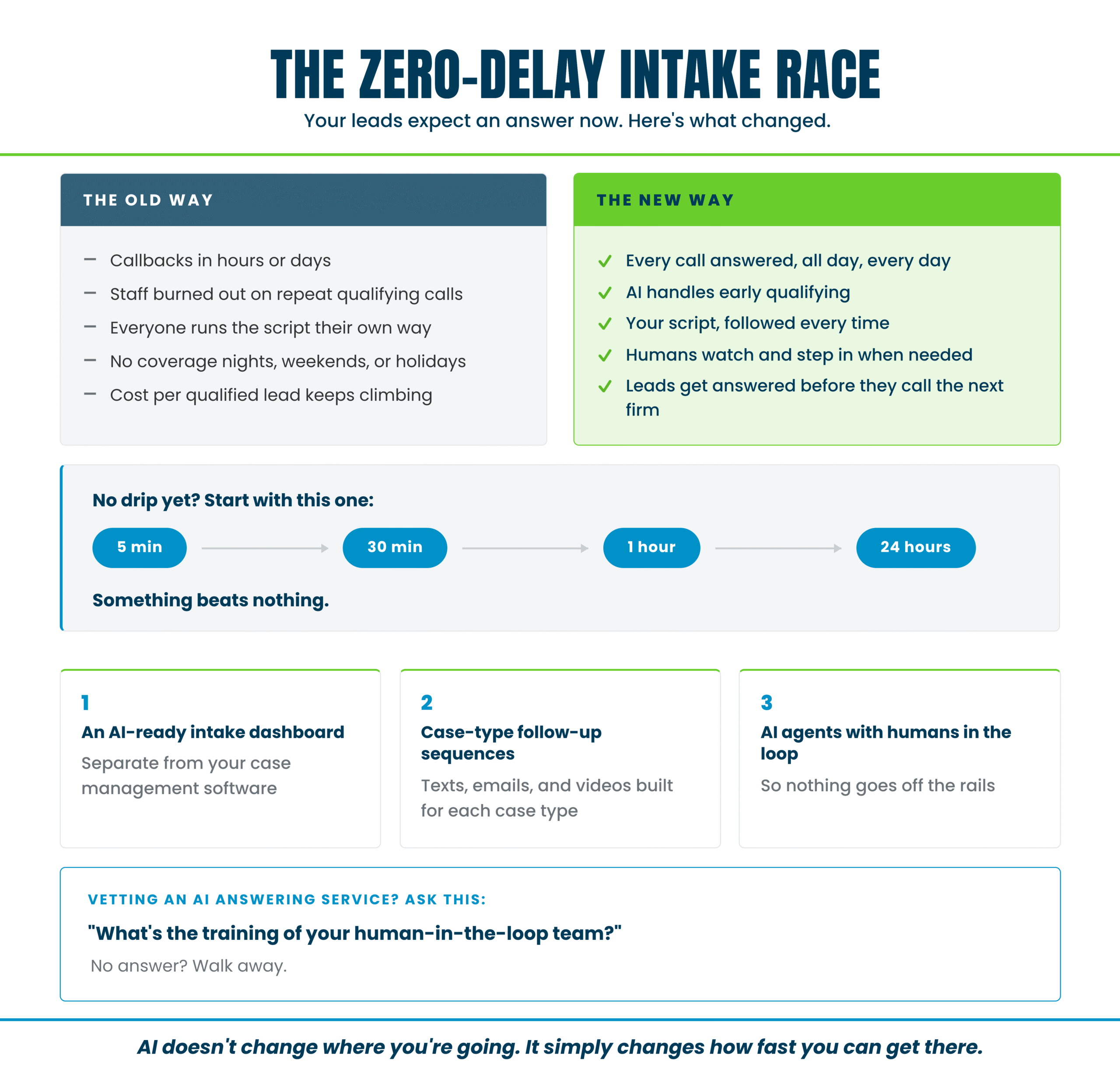
Nothing in the left column comes from lazy people. It’s a coverage problem and a consistency problem. Good people can’t be on the phone at 9:40 on a Saturday night, and even your best intake specialist sounds different at 4:55 on a Friday. Those are exactly the problems AI is good at solving.
Where the Race Is Actually Lost
A lot of owners tell us their intake is great. Usually they mean they close most of the people who sit down across from them. That’s real. It’s also only one stage.
We break intake into five stages:
- Lead. Someone reaches out.
- Qualified lead. Intake confirms they fit your criteria.
- Consult set. They book an appointment.
- Show for consult. They actually show up.
- Retained. They hire you.
Speed matters most in the first three, and that’s where most firms never look. If you only measure the consult room, you’ll never see the lead who hit voicemail at dinnertime and signed with someone else before breakfast. Track all five stages and you’ll know exactly where cases are slipping away.
How to Win the Zero-Delay Intake Race
There are three pieces. You don’t need all of them this week, but it helps to see where you’re headed.
1. An AI-Ready Intake Dashboard, Separate From Case Management
Case management software is great for managing cases. It wasn’t built to track leads minute by minute.
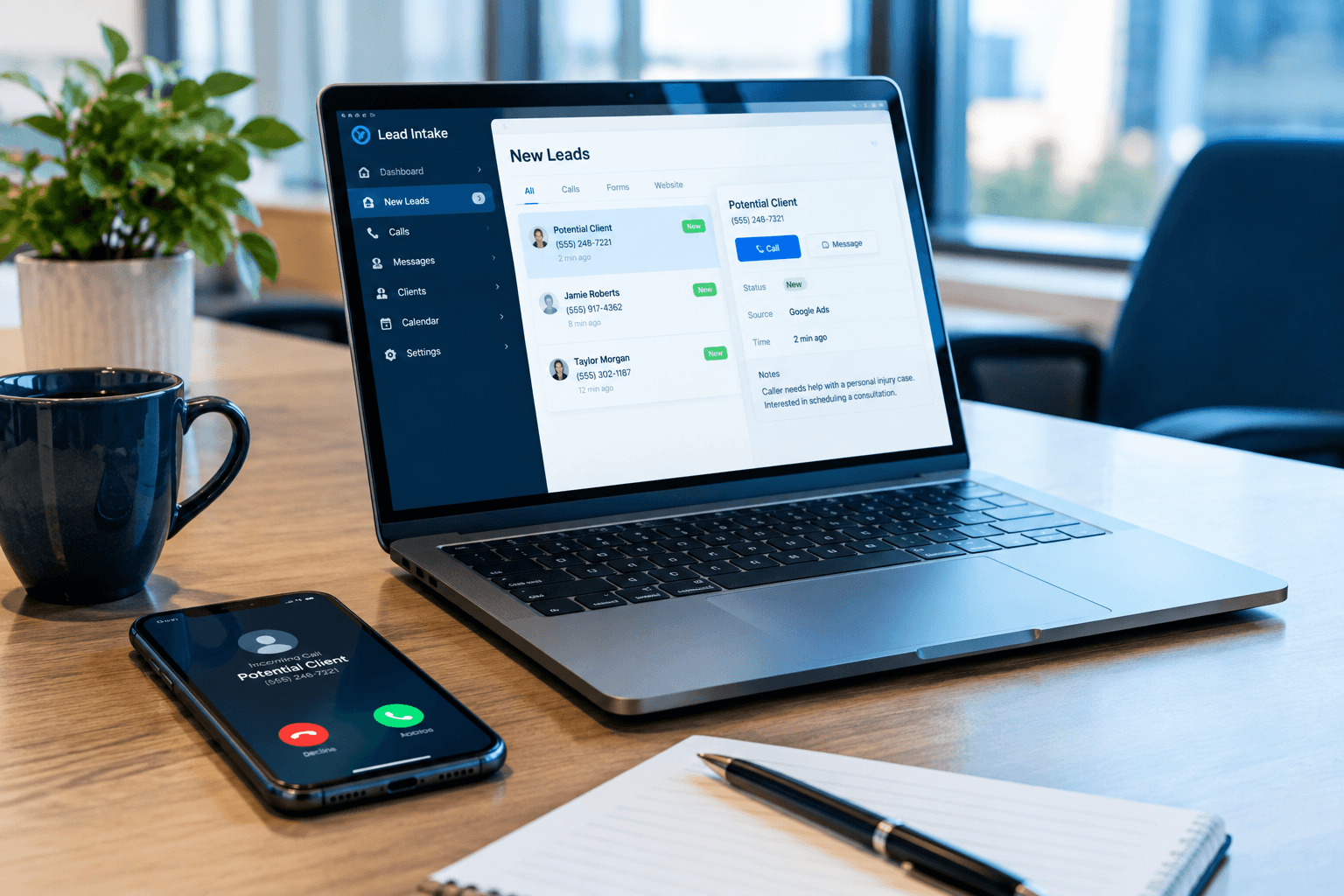
You need an intake dashboard that plugs into every marketing source and shows how long each lead waited, how many times they’ve been contacted, which stage they’re in, and which sources turn into signed cases. It’s also what AI agents plug into. Without it, AI just helps you fly blind faster.
2. Follow-Up Sequences Built for Each Case Type
A DUI lead at midnight and a probate lead on a Tuesday afternoon need different follow-up. Build texts, emails, and short videos for each case type you want more of.
This is where our “Cases I Want” ranking earns its keep. Your 3s get the most aggressive, personal follow-up. Your 2s get follow-up focused on gathering information. Your 1s get confirmed before anyone writes them off. Add real value wherever you can. A quick video answering the question that lead is lying awake about beats “just checking in!” every time.
3. AI Agents With Humans in the Loop
This is the exciting piece, and it’s where firms get hurt.
AI can answer instantly, follow your script word for word, and do it at 2 a.m. on Christmas. It shouldn’t run unsupervised. The way we see it, automation supplements your people, it doesn’t replace them. AI handles the first conversation while trained humans watch and jump in when a call needs judgment, empathy, or a closer. The grieving widow, the caller in crisis, and the six-figure case still need a person, and the right setup gets one there fast.
No Drip Yet? Start With This One
If you don’t have automated follow-up today, start with a simple four-touch drip after every new lead:
5 minutes → 30 minutes → 1 hour → 24 hours
That could be a text at five minutes, a call at thirty, an email with a short video at one hour, and another call the next day.
Something beats nothing. A basic drip running tonight will sign more cases than a perfect one you’re still planning next quarter.
Ready for More? Build Up to 8 to 12 Touches
Once your starter drip is running, grow it into a full cadence. We recommend 8 to 12 touches per lead:
- Within 5 minutes: a call and a text. A live answer is always best.
- Days 1 to 3: three touches a day, one call, one text, and one email, rotating morning, afternoon, and evening.
- The next 7 days: four or five more touches across all three channels.
- The next 30 days: a check-in once or twice a week for leads who haven’t responded.
- After 60 days: a monthly nurture email with education and value.
If those first three days look familiar, they should. It’s our 3X3 Method: three times a day, three ways, for three days. That’s nine touches before most firms make their second call. Bernard was doing a version of it before either of us had a name for it.
Adjust the timing to your practice area. Estate planning and family law leads often need a longer runway than a DUI lead.
Vetting an AI Answering Service? Ask This
Every AI answering service will promise instant answers and 24/7 coverage. Most can deliver the AI part. So skip the demo questions and ask:
“What’s the training of your human-in-the-loop team?”
You want to hear who those people are, how they’re trained on legal intake, and how they know when to take over. If the answer’s fuzzy, or there’s no human team at all, walk away. The AI is the easy part. The humans behind it protect your firm’s reputation.
What AI Changes, and What It Doesn’t
AI isn’t a new strategy. It won’t decide which cases you want, what your firm stands for, or how you treat people once they walk in the door. Those are still yours.
It simply removes the delay between a scared person reaching out and your firm being there for them. Bernard won because he refused to let leads go cold. Now every firm has the tools to be Bernard, without burning out their team to do it.
AI doesn’t change where you’re going. It simply changes how fast you can get there.
Want to Win the Race Without Building It All Yourself?
Everything in this post is exactly what our intake team helps firms put in place. We pair intake technology and automated follow-up from our sister company Attorney Fuel with trained, AI-enabled intake support from our sister company Attorney Assistant, plus sales training that helps your team close. Maybe your response times depend on who’s on shift, or maybe lead volume has your team stretched thin. Either way, there’s a starting point that fits where your firm is right now.
Show Me How to Sign More of My LeadsFrequently Asked Questions
What is the Zero-Delay Intake Race?
It’s SMB Team’s term for how legal leads are won today. Leads contact several firms at once, and the firm that responds first with a real conversation usually signs the case.
How fast should a law firm respond to a new lead?
Within five minutes, and no later than 15. Research shows 35% to 50% of sales go to whoever responds first.
How many times should a law firm follow up with a lead?
Plan for 8 to 12 touches across calls, texts, and emails. Start within five minutes, make three touches a day for the first three days, then taper into weekly check-ins and a monthly nurture.
Can AI answer the phones for my law firm?
Yes. AI agents can answer every call, qualify leads with your script, and book consultations at any hour. The best setups keep trained humans in the loop to take over when a call needs judgment or empathy.
What should I ask before hiring an AI answering service?
Ask, “What’s the training of your human-in-the-loop team?” A strong provider will explain who reviews calls, how they’re trained on legal intake, and how quickly they step in.