
SMB Team has added legal research to AI Workforce Pro, its proprietary AI platform built specifically to support the growth of law firms. Attorneys can now research case law and verify the citations in documents they have already drafted, with every result drawn from a database of real court opinions. The capability is live now for all AI Workforce Pro clients at no additional platform cost.
Research has been the one part of legal work that most firms keep away from AI, even as AI takes on intake, billing, and client follow-up. The reason is specific. A general AI tool can produce a citation in perfect format, attributed to a plausible court, for a case that does not exist, and the attorney who files it owns the consequences. AI Workforce Pro closes that gap by connecting research directly to real court opinions, so every case it returns can be traced to its source and read before it goes anywhere near a filing.
How the New Legal Research Capability Works
Research in AI Workforce Pro is grounded. The AI is connected to an authoritative repository of court opinions and must pull its answers from that source, so it reports what the database actually contains instead of producing a citation from memory. Every result comes back with the case name, the citation, the court, the date, and a link to the opinion, which means the attorney can open and read the case in seconds.
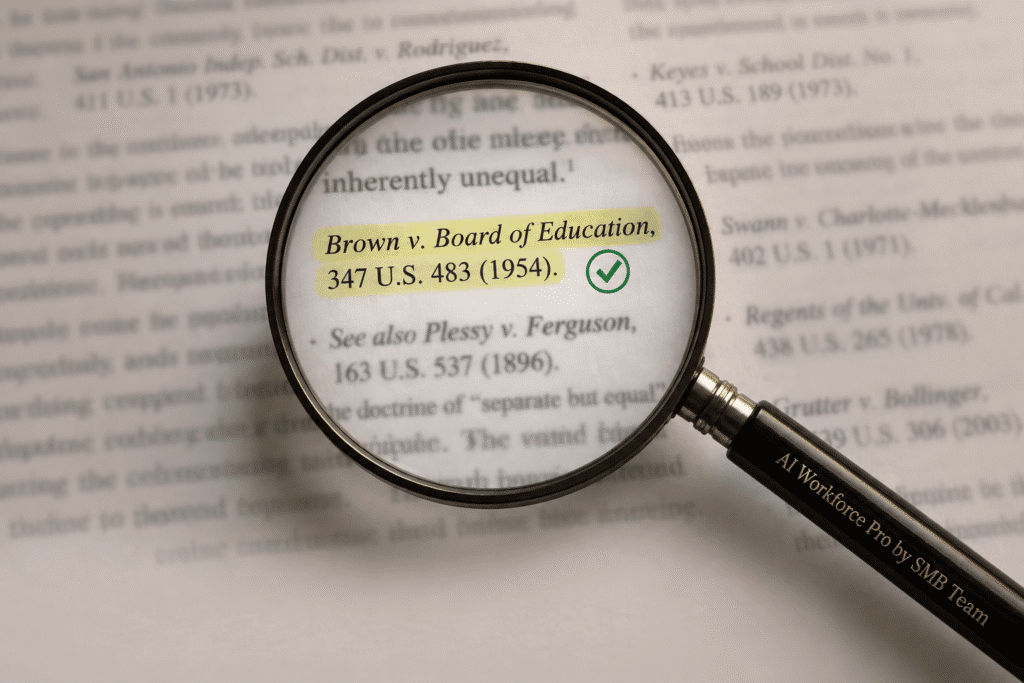
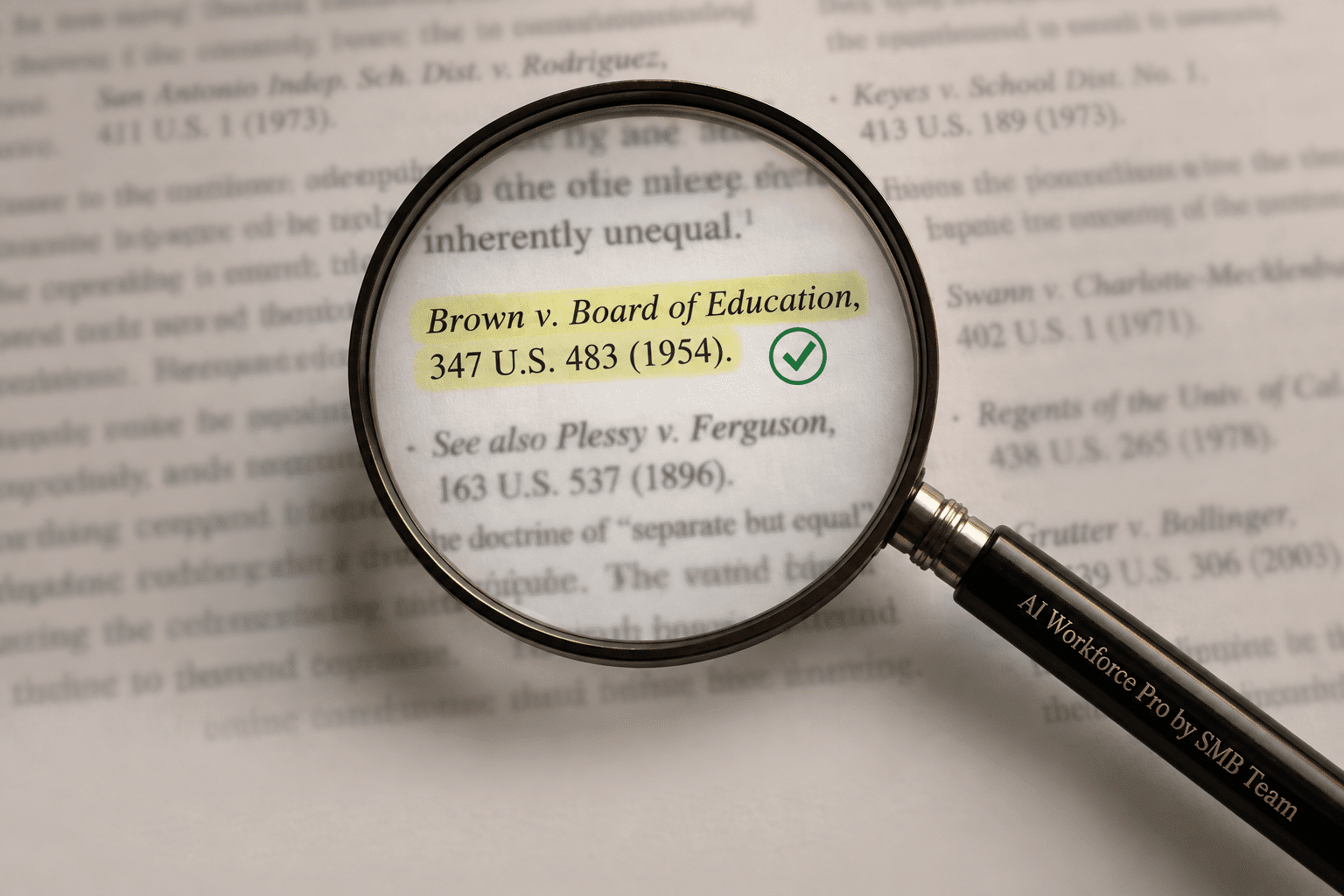
Firms can put the same capability to work in two ways. An attorney who has already drafted a brief or motion can run the document through the platform to confirm that its citations are real and correctly named, catching fabricated or garbled cites before anything is filed. An attorney who is starting from a legal question can instead receive a grounded set of real cases to read, evaluate, and build from, whether that question involves premises liability, custody relocation, or the scope of a consent search.
The capability is built into the platform rather than tied to a single AI model, so a quick citation check and a deep research memo can each run on the model best suited to the task while drawing on the same court data.
A Verified Starting Point, With the Attorney in Control
The platform is designed with a human in the loop. It produces a verified starting point, and the attorney remains responsible for reading and confirming every authority relied upon, including checking that a case is still good law. That approach reflects the duties of competence and candor that already apply to any research, and state bar rules and local court orders on AI use still govern.
Legal research joins more than 45 law firm skills already inside AI Workforce Pro, alongside prebuilt integrations, access to leading AI models, encryption in transit and at rest, and contractual agreements that keep client information out of model training. For firm owners, the result is one more category of time-intensive work that can run on the same system as intake, billing, and follow-up, which is how a firm grows capacity without growing overhead at the same rate.
Read the Full Announcement
The launch announcement covers more than this summary can, including why SMB Team built the capability and how it fits into the rest of the platform. Read it here, or see how AI Workforce Pro works for your firm.
Frequently Asked Questions
What is AI Workforce Pro?
AI Workforce Pro is SMB Team’s AI platform built for law firms. It includes more than 45 law firm skills, prebuilt integrations with the tools firms already use, and access to leading AI models in a secure environment, and it now includes grounded legal research.
Is the legal research in AI Workforce Pro available now?
Yes. Legal research is live now for all AI Workforce Pro clients at no additional platform cost.
How does AI Workforce Pro prevent fabricated citations?
The AI must pull results from a repository of real court opinions rather than generating citations from memory. Each result includes the case name, citation, court, date, and a link to the opinion so the attorney can read it.
Does citation verification confirm a case is still good law?
No. Verification confirms that a case exists and is cited correctly. Attorneys should still check subsequent history before relying on any authority.
Can lawyers ethically use AI for legal research?
Generally, yes. ABA Formal Opinion 512 recognizes that lawyers may use generative AI tools as long as they meet their existing duties, including competence, confidentiality, and verifying every authority they cite. State bar guidance and local court orders may add requirements, so review the rules wherever you practice.
Want this running in your firm?
Book a call with us now to learn more. We’ll walk you through how AI Workforce Pro handles case law research and citation checks, and what it would look like set up for your practice.
Book a Call